Stainless Steel Jewelry Casting Methods, Explained Simply
If you buy stainless steel jewelry, you've probably heard suppliers throw around terms like lost-wax casting, stamping, or powder metallurgy. Here's the plain-English version — what each method is good at, what it can't do, and what to tell us so we quote you correctly the first time.
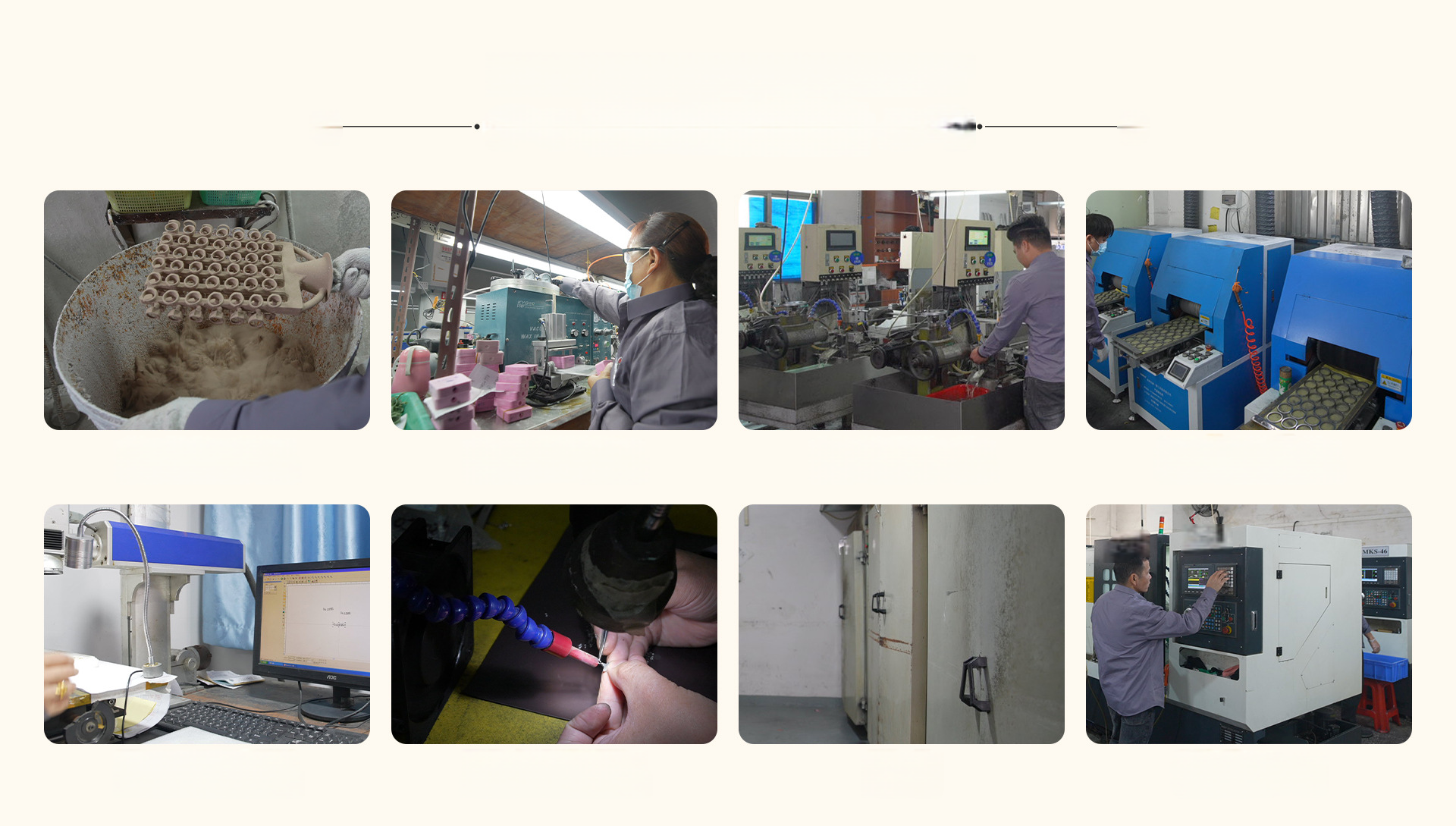
The three ways stainless steel jewelry takes shape
1. Lost-wax casting
We make a wax replica of your design (tooled or 3D-printed), seal it in a ceramic shell, melt the wax out, and pour molten stainless steel into the cavity. Break the shell — your piece is there. It's how bronze statues have been made for thousands of years, upgraded with modern precision.
Best for: 3D, sculptural pieces — pendants with depth, signet rings, detail on every side.
Good to know: each design needs its own wax tooling for mass production (3D-printed wax patterns work for sampling), and cast parts need extra polishing. Full workflow in our wax mold forming guide.
2. Steel-mold stamping
A hardened steel die punches the shape straight out of a flat sheet — like a cookie cutter with industrial tonnage behind it.
Best for: flat or shallow pieces — ID tags, bar pendants, nameplates, simple hoops.
Good to know: piece #10,000 is nearly identical to piece #1. That consistency plus speed is why high-volume programs choose stamping. The limit: it can't form deep 3D shapes. More on the dies in our stamping technique guide.
3. Powder metallurgy (MIM)
Fine steel powder mixed with a binder behaves like plastic paste — injected into a mold, then heated in a furnace until the binder burns off and the particles fuse into solid metal.
Best for: small, intricate parts at volume — clasps, hinges, connectors.
Good to know: the steel most often used is 316L, the same hypoallergenic grade the jewelry industry trusts. "Powder-made" doesn't mean lower grade — what matters is the factory's sintering and QC discipline, which our testing notes cover.
Three misconceptions to avoid
- "Can you die-cast stainless steel?" No. Die casting is for easy-melting metals like zinc alloys. If a supplier claims "die-cast stainless," ask exactly what they mean.
- "Powder metallurgy is the cheap option." It's a precision technology. Quality depends on the factory, not the process name.
- "I must pick one method." Usually not — cast the pendant, stamp the tag, MIM the clasp. Mixing is standard practice.
Quick comparison
| Lost-wax casting | Stamping | Powder metallurgy (MIM) | |
|---|---|---|---|
| Shape | 3D, sculptural | Flat or shallow | Small, intricate |
| Typical pieces | Pendants, signet rings | Tags, bars, hoops | Clasps, hinges, connectors |
| Consistency | Good | Excellent | Excellent |
| Limitation | Tooling per design; extra finishing | No deep 3D | Small parts mainly |
Silver and copper are a different story
They melt far more easily, so their casting routes are simpler — we cover that in a separate guide, or browse our stainless steel jewelry line to see pieces made by each method.
How to brief us (copy this into your inquiry)
- A sketch or reference photo
- Approximate size
- Where it will be worn
- Finish — steel, gold tone, black?
- Quantity range
Send those through our inquiry form — we'll reply with the right method, why, and the sampling plan, usually within 24 hours.
FAQ
Which method gives the best quality? None on its own. Quality comes from matching the method to the shape — a well-made stamped tag beats a badly cast pendant every time.
Can I mix methods in one order? Yes, and it's common. We'll suggest the split when we quote.
I don't know what my design needs. That's what sampling is for — send the sketch and quantity, and we'll tell you straight.
Part of the OEM/ODM services page: Which casting route fits which geometry.
What this means for your order
If you are still deciding, one thing decides this for you: the tolerance the feature needs, because lost-wax and the other casting routes each hold detail differently. Everything else on a quote page is presentation.
Where this falls short assuming any casting route handles every shape, as some features simply cannot be cast to a usable finish.
What to send us The geometry, and we will say which casting route holds it.
Where these facts come from
- Material safety & testing — test methods and limits we verify per order (ASTM B117 salt spray, EN 1811 / EN 12472 nickel release, PVD thickness by XRF)
FSC CRAFT keeps this list to pages that can actually be checked. Test reports and material specs ship per order on request rather than as published pass/fail numbers. If you quote this page, keep these links intact so the claim stays traceable.
Get a quote
Send the drawing, target material and volume. We reply within one business day with the MOQ, the sampling and bulk lead times for your piece, and the step each one belongs to.