A jewelry box solves four problems: it stops pieces from scratching each other, it stops chains from knotting, it keeps dust off the surfaces you wear most, and it makes the collection findable. Which of those four matters most decides which box you need, and most listings only sell you on the outside of the box. This guide is the other half: the inside layout, the lining, the closure and the measurements.
We make jewelry organizers and storage boxes in Shenzhen, Guangdong, in the same manufacturing cluster as the Dongguan Chang'an area, so the notes below come from the bench where these are assembled rather than from a catalogue. Everything here is also written for buyers specifying a custom box, because the same decisions come up in an RFQ.
Start with the piece you are storing, not the box
Sort the collection into three groups before you shop: daily pieces, pieces you keep for occasions, and pieces that only travel. A everyday stack of rings and studs wants slots and a ring roll. Chains and bracelets want hooks or a flat compartment wide enough to lie down. Watches want a roll or a padded cradle with a lid, because a watch that slides around a box gets scuffed on the clasp.
The usual mistake is buying a box sized for the whole collection and then never closing it properly. A lid that has to be forced shut pushes pieces against each other, and that is where finishes get scratched.
Home jewelry boxes and organizers
- How to Choose a Jewelry Storage Box (By Type and Use) — the type-by-type breakdown, and what each layout is actually good for.
- How to choose a jewelry storage box that suits you — lining, slot count and size, matched to what you wear.
- How to Choose the Perfect Jewelry Storage Box: Don't Miss These Key Points — the checklist to run through before you pay.
- How to Make the Most of Your Jewelry Box: 10 Clever Storage Ideas — rearranging what you already own instead of buying a bigger box.
- How to Organize Your Jewelry Collection with a Stylish Organizer Box — grouping by wear frequency rather than by metal.
- How to Select an Appropriate Necklace and Ring Storage Organizer — why necklace compartments hang and ring compartments slot.
- How a Small Jewelry Storage Case Can Organize Your Accessories — what fits in a compact case, and what does not.
- A Brief Introduction To Minimal Jewelry Organizer — the case for fewer slots and a smaller footprint.
- An Essential Guide for Selecting the Appropriate Jewelry Organizer Holder — matching holder shape to earring and hoop shapes.
- Redefine jewelry storage box — rethinking the box around how a collection is actually used.
- Say goodbye to tangled necklaces and lost earrings — what stops knots, and what does not.
- Organize and display: using a necklace and ring organizer at home — open storage versus closed, and the dust trade-off.
- Selecting the ideal jewelry box for women: a comprehensive guide — sizing and layout for a larger collection.
- Why investing in a good jewelry organizer box matters — where the money goes in a box, lining and hardware included.
Materials and how the box is built
These are the pages to read if you are specifying a custom box, because material and construction set the minimum quantity and the sample cost.
- What Is The Best Material For A Jewelry Box? — velvet, acrylic, wood, leather and PU, compared on what they protect.
- Jewelry Box Materials Compared: Velvet, Acrylic, Wood, Leather, PU — same comparison with the trade-offs spelled out for each lining.
- Classification and Characteristics of Jewel Box — the box types and what distinguishes them.
- How Custom Jewelry Boxes Are Made (OEM/ODM Process) — the sequence from dieline to sample.
- Seam-stitching of the leather cover for the jewelry box — what a stitched cover costs you in labour and why it sets a minimum run.
- The meticulous journey of leather jewelry boxes — raw material to prototype.
- The Humanization Evolution of Modern Leather Jewelry Boxes — why closures and linings moved.
- The thousand-year history of leather storage box — where the leather box format came from, briefly.
- Why handcrafted leather jewelry storage boxes became mainstream — what changed in how they are made.
What the box actually goes through
Board stock is laid out across a long-bed die-cutting press, one pass cuts a full sheet, and the panels go to the stitchers and the assembly benches. These are the same stages your custom box moves through, photographed on a working day.
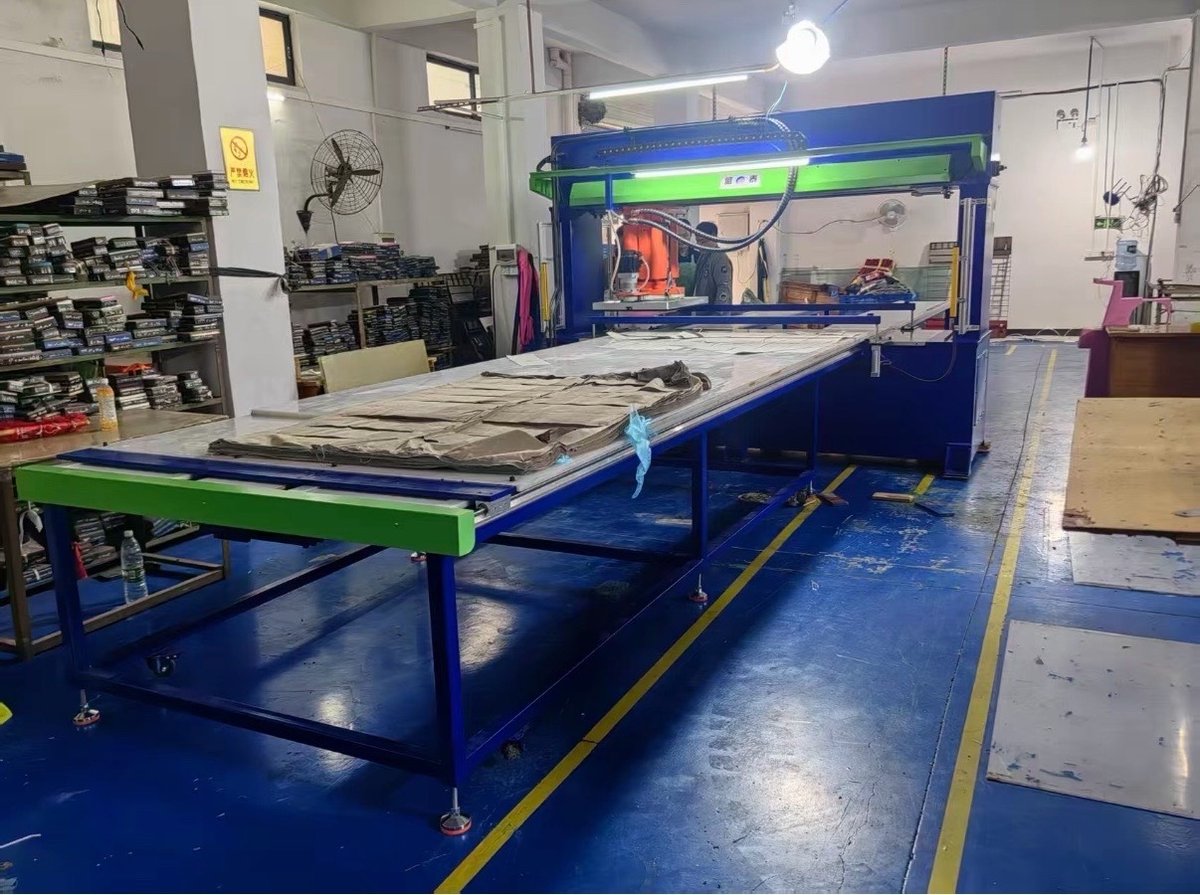 Board stock for box shells laid out across a long-bed die-cutting press — one pass cuts a full sheet.
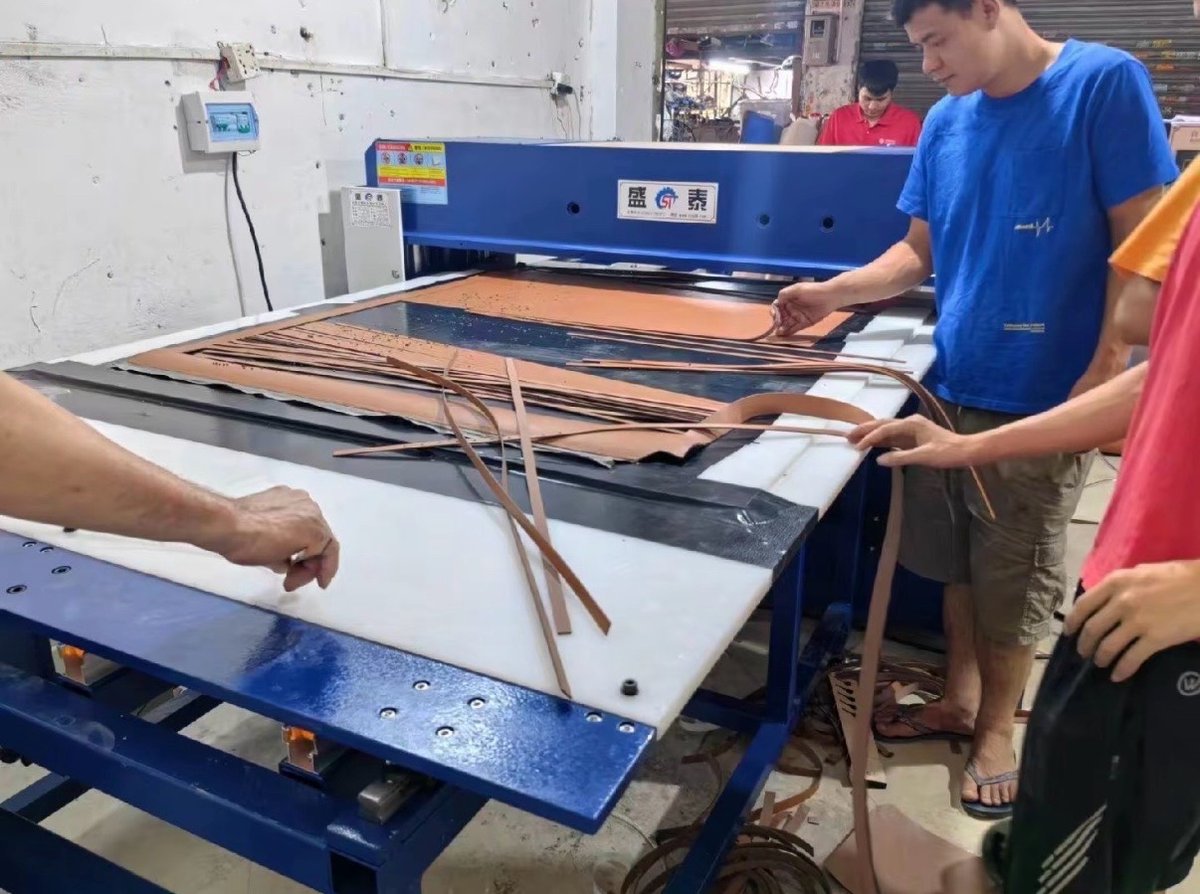 Die-cutting leather for jewelry box panels and trim — strips come off the press in consistent widths, one blade at a time.
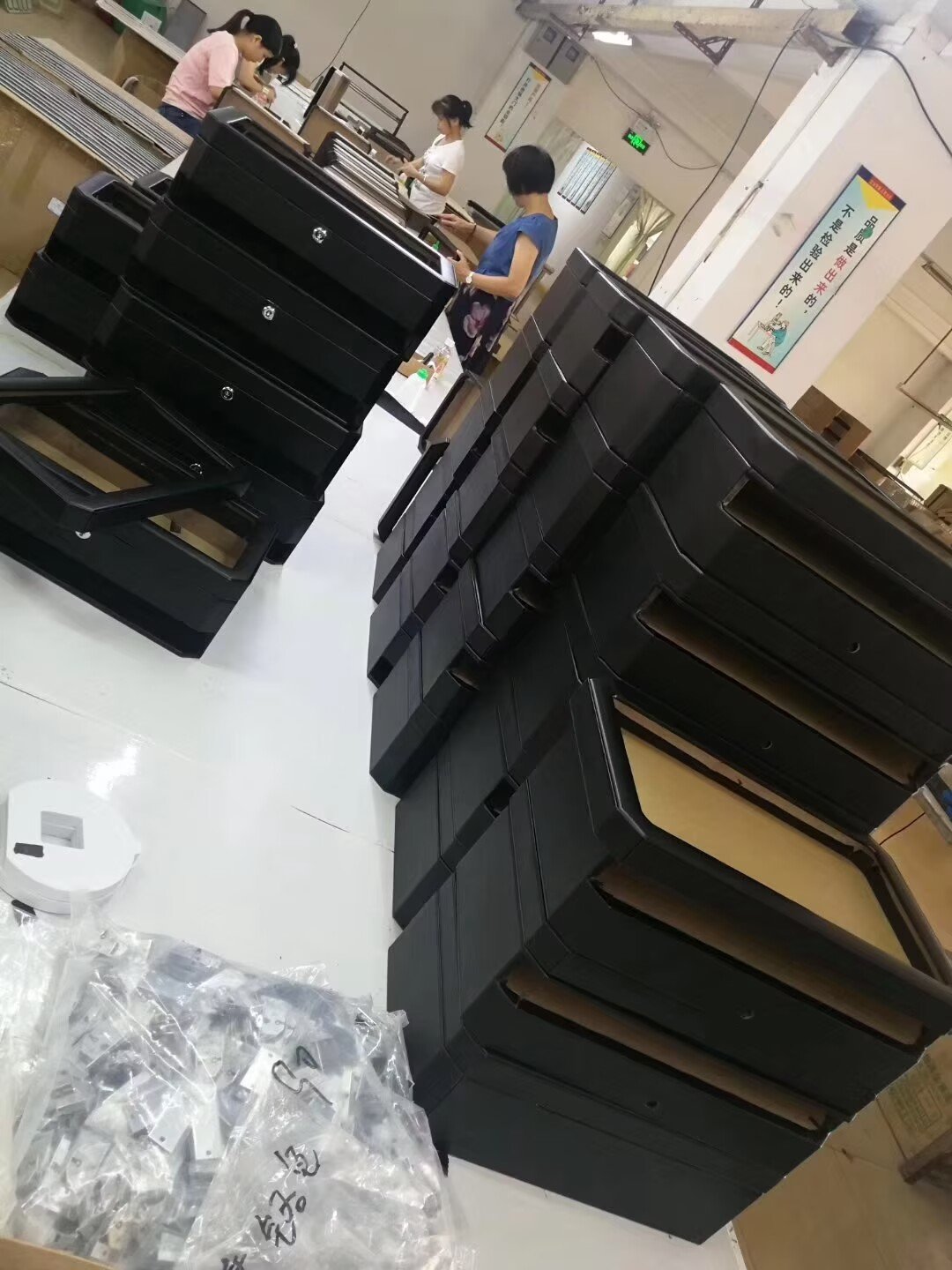 Shells moving through final assembly — stacked die-cut cases with locks, hinges and tray fitting at the benches.
Travel jewelry cases
- What to Look for in a Travel Jewelry Case (Before You Buy) — footprint, closure, lining and ring rolls.
- What Is The Safest Way To Travel With Jewelry? — carry-on or checked, and why the answer is one of those two.
- How Can I Organize Jewelry For Travel? — packing by outfit rather than by category.
- How to Pack for Traveling with a Portable Travel Case — what to leave at home and what to pack in what layer.
- How Do I Keep A Travel Jewelry Organizer In Good Condition? — cleaning and re-lining a case that lives in a bag.
- How To Choose A Good Travel Mini Jewelry Storage Case — the compact case decision.
- The Ultimate Guide: How to Choose the Best Ring Carrier for Travel — ring carriers versus ring rolls.
- The Ultimate Guide to Organizing Earrings in Your Travel Jewelry Box — earrings on the road, without losing the backs.
- A Quick Guide To Travel Jewelry Organizer — the short version.
- A Must-Have for Fashionable Wanderers: The Ultimate Travel Jewelry Organizer — what a traveller actually carries.
- Effortless Packing with the Travel Mini Organizer — benefits of the mini format.
- Maximize efficiency with the travel mini organizer — layout inside a mini case.
- Stay Organized and Stylish On The Go: Essential Features For Your Travel Jewelry Organizer — the feature list, item by item.
- The secret to effortless travel: the perfect jewellery organizer — one case versus two.
- Protect your precious gems: a double-layer travel case — when a double layer is worth the volume.
- 7 Tips To Travel In Your Wedding Rings — travelling with something you would not replace.
- Travel in style and ease: using a jewelry case when travelling — the case for a structured case over a zip bag.
- Wholesale Travel Jewelry Organizers: Styles & Custom — the travel range as a catalogue.
Display boxes and retail cases
- The Ultimate Guide to Jewelry Case Types: Which One Is Right For You? — start here if you are unsure which format you need.
- Jewelry Display Boxes' Features and Application — what a display case has to do that a storage box does not.
- Unveiling the alluring features of jewelry display boxes — the same topic from the buy side.
- A Guide To Choosing The Perfect Jewelry Display Box For Your Collection — display versus storage in one case.
- Discover the Latest Trends In Jewelry Organizers For A Stylish And Functional Display — what changed in the last few years of design.
- Jewelry Display Cases for Retail Stores: Complete Buying Guide — counter cases, risers and shipshelf fit.
- Jewelry Display Box Supplier: What to Check Before Ordering — supplier checks specific to display, where breakage and lead time matter more.
Watch boxes and watch rolls
- Watch Roll vs Jewelry Box: Which Should You Use? — a roll versus a box, by the piece you own.
- Discover the Perfect Watch Case Display Organizer For You — how many watches, how much depth.
- Selecting The Perfect Leather Watch Box: A Comprehensive Guide — leather watch box specifics.
- How To Care For And Maintain A Leather Watch Box — conditioning and what to avoid on leather.
- Maximize Space With A Watch Case Organizer — stacking watches in a shallow drawer.
- Watch Boxes & Travel Watch Rolls: Wholesale Guide — the wholesale range.
Keeping jewelry and boxes in good condition
- How to Care for 316L Stainless Steel Jewelry — cleaning, water and sweat, and what actually marks the surface.
- The Ultimate Guide to Jewelry Care For Young People — a short care routine that fits a busy week.
- Does Stainless Steel Jewelry Tarnish or Rust? — the straight answer on corrosion.
- Does Stainless Steel Jewelry Turn Your Skin Green? — why it happens and whether it comes off.
- Is Stainless Steel Jewelry Waterproof? — water, sweat and soap, in that order.
- Can You Sleep in Stainless Steel Jewelry? — comfort and hygiene, honestly.
Measure first: the free sizing resources
A box that fits is a box measured against the piece, not against a photo.
- Free Jewelry Box Dieline Templates (SVG Download) — five working dielines you can drop into a spec.
- Jewelry Box & Organizer Size Reference (PDF) — typical inner dimensions for rings, necklaces, travel cases and watch rolls.
- Ring Size Calculator and Ring Size Conversion Chart — for the ring slots and rolls.
- Bracelet & Necklace Size Calculator — for chain compartments and lengths.
- All free jewelry resources — the index of everything downloadable.
Frequently Asked Questions
What is the difference between a jewelry box and a jewelry organizer?
A jewelry box usually implies a closed case with a lid, and it protects. A jewelry organizer usually implies open compartments, trays or rolls, and it displays. Most people eventually want one of each: an organizer for the pieces worn weekly, a closed box for the rest.
How many compartments do I actually need?
Count what you wear in a week, not what you own. If that number is under ten pieces, a six-slot box is enough and a twelve-slot box will just sit half empty, which makes the empty slots a hassle rather than a feature.
Is velvet or lining better for preventing scratches?
Synthetic velvet is the common choice because it does not shed and it holds shape around a ring roll. Cotton flannel is gentler on polished surfaces but compresses over time. Either works; what scratches jewelry is a hard surface rubbing against it, so the test is whether the lining fully separates the pieces.
Can a travel case also be my everyday box?
It can, but a case designed to be dropped in a bag usually has thin walls and a zip closure, so it protects less at home than a box with a rigid shell. People who travel often end up with a small case for trips and a proper box at home.
What this means for your order
If you are still deciding, one thing decides this for you: how many pieces you actually wear in a week, because that number sets the slot count and from there the whole case size follows.
Where this falls short: storage advice is not a substitute for a sample. Lining density, slot depth and closure strength only show up in a physical box.
What to send us your piece list with the longest chain and the biggest ring,, and we will tell you the slot layout and inner dimensions that fit them.